

A digital detox triggers a measurable reduction in the stress hormone cortisol by systematically interrupting the neuro-hormonal feedback loops of chronic digital stimulation.
- Sensory deprivation through boredom and reduced screen time allows the brain’s dopamine reward system to reset and activates the Default Mode Network for self-reflection.
- Dietary and light-exposure protocols stabilize metabolic function and realign the body’s natural circadian rhythm, directly downregulating the HPA axis (the central stress response system).
Recommendation: Approach a digital detox not as a passive vacation, but as a targeted physiological intervention with specific protocols to maximize biological stress reduction.
If you feel perpetually wired, mentally foggy, and exhausted, you are likely caught in a neuro-hormonal feedback loop. Every notification, email, and endless scroll provides a micro-hit of dopamine, keeping your brain in a state of high alert. This constant stimulation signals to your body that it is under threat, causing your adrenal glands to flood your system with cortisol, the primary stress hormone. Over time, this chronically elevated cortisol disrupts sleep, impairs cognitive function, and fuels a cycle of anxiety and addiction to the very devices causing the stress. For the stressed professional, this state feels like running a marathon while sitting at a desk.
The common advice is to simply “disconnect” or “spend time in nature.” While well-intentioned, this advice often fails because it ignores the underlying physiology. It’s like telling someone with a fever to just “cool down” without addressing the infection. To truly break the cycle, you need to do more than just put your phone away; you need to execute a series of biological protocols designed to systematically dismantle the mechanisms of chronic stress. This isn’t about a vague sense of relaxation; it’s about a measurable, physiological recalibration of your entire stress response system.
The key to understanding why a properly structured digital detox can lower cortisol in as little as 48 hours lies not in what you stop doing, but in what you actively start doing to support your body’s biology. This isn’t about willpower; it’s about physiology. This article will deconstruct the specific biological and psychological cleansing protocols that turn a simple break into a powerful hormonal reset. We will explore how strategic boredom, precise dietary choices, and the elimination of artificial light work in concert to recalibrate your HPA axis and restore your body’s natural state of balance.
This guide breaks down the core physiological mechanisms behind a successful cortisol detox. Each section provides a data-driven explanation of how to leverage your body’s own biology to achieve a profound state of rest and recovery.
Summary: The Biological Blueprint for a Cortisol Reset
- Why boredom is the first necessary step to resetting your reward system?
- Juice or Whole Food: Which sustains energy levels for light hiking?
- How to prevent the “caffeine crash” headache on day 1 of a detox?
- The dietary error that undoes 7 days of detox in one meal
- Why you might have vivid dreams during the liver cleansing process?
- Why 3 nights without artificial light resets your melatonin production?
- The cocktail error that adds 1000 calories to your day without you noticing
- How to Find Rural Retreats with Zero Light Pollution for Deep Sleep?
Why boredom is the first necessary step to resetting your reward system?
In a world of constant stimulation, boredom is an unfamiliar and often uncomfortable state. However, from a neurological perspective, it is the most critical first step in dismantling the addiction to digital distraction. Your brain’s dopamine reward system has been conditioned to crave the small, frequent rewards delivered by notifications and new information. This creates a high baseline of neurological arousal, which is directly linked to HPA axis activation and cortisol release. By intentionally embracing boredom—removing the external stimuli—you are essentially starving this overactive reward pathway. This forced “under-stimulation” is the prerequisite for resetting your brain’s sensitivity to dopamine.
When the brain is deprived of its usual external inputs, it shifts its activity to a different network. This is where the true “reset” begins.
Case Study: Activating the Default Mode Network (DMN)
The Default Mode Network (DMN) is a large-scale brain network that is most active during wakeful rest, such as daydreaming, mind-wandering, and introspection. It is suppressed during goal-oriented tasks, like checking email or scrolling social media. When you allow yourself to be bored, the DMN activates, creating a coherent internal narrative that is central to constructing your sense of self. This activation is crucial for self-reflection, creative problem-solving, and integrating unresolved emotions—processes that are chronically suppressed by digital overload. By quieting the external noise, you finally allow the DMN to do its work, reducing the internal “threat” signals that keep cortisol elevated.
This process isn’t just a subjective feeling of calm; it has measurable biological outcomes. A 2022 study on digital screen time reduction found that just one week of reduced use led to an 8.48-point improvement in the WHO-5 Well-Being Index, a score reflecting significant gains in mood and stress reduction. Boredom is not emptiness; it is the physiological space required for your brain to begin its self-repair process.
Juice or Whole Food: Which sustains energy levels for light hiking?
During a detox retreat, many turn to juice cleanses, believing them to be the epitome of “clean” eating. However, when it comes to regulating cortisol and sustaining energy for activities like light hiking, this is a profound metabolic error. The key difference lies in glycemic load and fiber content, both of which have a direct impact on your HPA axis. Juicing removes nearly all of the fiber from fruits and vegetables, delivering a concentrated dose of sugar directly into your bloodstream. This causes a rapid blood sugar spike, followed by a dramatic crash. This volatility is a major form of metabolic stress, triggering a cortisol release to re-stabilize blood glucose levels.
In contrast, whole foods provide a slow, sustained release of energy. The fiber in whole fruits, vegetables, and grains acts as a brake on sugar absorption, preventing the blood sugar rollercoaster that stresses the adrenal system. Furthermore, this fiber is essential food for your gut microbiome, which plays a pivotal role in regulating inflammation and, by extension, cortisol. For sustained energy on a hike, a handful of almonds and an apple will always outperform a bottle of fruit juice.

The table below clearly illustrates the physiological impact of these two dietary choices. For anyone aiming to lower cortisol, the choice is clear: prioritize foods that promote metabolic stability, not those that create internal chaos.
| Factor | Juice | Whole Foods |
|---|---|---|
| Glycemic Load | High – rapid spike | Low – gradual release |
| Fiber Content | Minimal/None | High – feeds beneficial gut bacteria |
| Cortisol Response | Spike from blood sugar crash | Stable – supports HPA axis |
| Energy Duration | 30-60 minutes | 3-4 hours sustained |
How to prevent the “caffeine crash” headache on day 1 of a detox?
For most professionals, caffeine is a non-negotiable tool for daily function. Abruptly removing it on day one of a detox is the single most common reason for failure. The infamous “caffeine crash” headache is a real physiological event caused by vasodilation. Caffeine constricts blood vessels in the brain; when it’s removed, these vessels expand rapidly, leading to a throbbing headache that can easily be mistaken for a sign that the detox is “not working.” This painful experience itself can become a stressor, raising cortisol and tempting you to abandon the process. As the Henry Ford Health System notes, stress and relaxation are directly tied to this hormone.
Cortisol is elevated when we experience heightened anxiety or stress, and it’s lowered when we’re in a relaxed state.
– Henry Ford Health System, 10 Ways To Lower Your Cortisol Levels When You’re Stressed Out
Preventing this crash requires a strategic, phased approach rather than a cold-turkey shock to the system. The goal is to gently wean your body off its dependency, supporting it with hydration and key nutrients to ease the transition. By managing the withdrawal symptoms proactively, you prevent the pain and stress that would otherwise sabotage your cortisol-reduction goals from the very start. A well-managed caffeine taper ensures your first 48 hours are focused on rest and recovery, not on battling a debilitating headache.
Your Action Plan: The Caffeine Withdrawal Prevention Protocol
- Begin tapering caffeine 3-5 days before detox, reducing your intake by 25% each day to allow your vascular system to adapt gradually.
- On day one of the detox, hydrate aggressively with electrolyte-enhanced water (at least every 2 hours) to support cellular function and blood volume.
- Take 400mg of magnesium glycinate before bed on the nights leading up to and during the first few days of the detox to help regulate hormones and relax blood vessels.
- Practice 5-minute deep breathing exercises 3-5 times throughout the first day to increase oxygenation and calm the nervous system.
- If a headache begins, apply peppermint oil to your temples; its natural properties can support healthy vasodilation and offer relief without medication.
The dietary error that undoes 7 days of detox in one meal
After a week of clean eating, your body’s systems, particularly your gut microbiome, have begun to adapt. You feel lighter, clearer, and less inflamed. The temptation to “reward” yourself with a meal of processed, high-sugar comfort food is immense. This is the single most destructive dietary error you can make, capable of undoing a week’s worth of progress in a matter of hours. Research shows that a single meal high in sugar and processed ingredients can trigger an immediate and significant cortisol spike, throwing your newly balanced HPA axis back into chaos.
The mechanism for this rapid reversal lies in the gut. A clean diet cultivates a diverse ecosystem of beneficial bacteria that thrive on fiber and whole foods. These bacteria help regulate inflammation and produce neurotransmitters that calm the nervous system.

Case Study: Microbiome Disruption and the Inflammatory Cascade
When you introduce a meal of processed foods, you unleash a perfect storm in your gut. The high sugar content feeds pathogenic bacteria and yeast, while the lack of fiber starves your beneficial colonies. This causes a rapid, large-scale die-off of good bacteria, which in turn triggers a powerful inflammatory response from your gut lining. This gut-based inflammation is a potent systemic stressor that immediately signals the HPA axis to release cortisol. Within hours, the anti-inflammatory, stress-reducing benefits you worked a week to achieve are effectively erased by this single dietary choice.
Re-introducing foods after a detox must be a gradual and mindful process. Think of your gut as a newly seeded garden; you wouldn’t immediately douse it with weed killer. Stick to whole, simple foods and slowly re-introduce variety, allowing your microbiome to adapt and strengthen without triggering a system-wide inflammatory shock.
Why you might have vivid dreams during the liver cleansing process?
One of the most surprising, and sometimes unsettling, side effects of a deep detox is the sudden emergence of intensely vivid, detailed, and memorable dreams. Far from being a random occurrence, this is a powerful biological signal that your brain is undergoing a crucial phase of repair known as REM rebound. Chronic stress and constant digital stimulation are known suppressors of REM (Rapid Eye Movement) sleep, the stage most associated with emotional processing, memory consolidation, and psychological restoration. You may be getting enough hours of sleep, but the quality is poor, and your REM cycles are short and fragmented.
During a detox, as your nervous system begins to calm and cortisol levels drop, your brain finally has the resources and safety signals it needs to catch up on this lost REM sleep. The title’s mention of “liver cleansing” is part of this broader systemic calming. As the liver’s metabolic burden from processing caffeine, alcohol, and processed foods is reduced, the entire body, including the nervous system, shifts from a state of high alert to one of deep repair. This allows for longer, more intense, and more frequent REM cycles than you are used to.
This phenomenon is well-documented in sleep science. As the Sleep Research Society explains, “Chronic stress and digital stimulation can suppress REM sleep. During a detox, as a study from the NIH explains, as cortisol levels drop and the nervous system calms, the brain compensates with REM rebound—longer, more intense REM cycles.” These vivid dreams are not a sign of distress; they are a sign of healing. It is your brain’s way of finally sorting through the backlog of unprocessed experiences and emotions that have accumulated during your period of chronic stress. Embracing them as a positive indicator can reframe the experience from unsettling to deeply reassuring.
Why 3 nights without artificial light resets your melatonin production?
The single most powerful environmental cue for regulating your sleep-wake cycle—and by extension, your cortisol rhythm—is light. Specifically, the absence of it. Your brain’s pineal gland produces the sleep hormone melatonin in response to darkness. This process is exquisitely sensitive and easily disrupted by modern artificial lighting, particularly the blue-wavelength light emitted by screens and energy-efficient bulbs. This is not a minor disruption; it is a fundamental sabotage of your body’s master clock.
Exposure to light in the evening, especially blue light, sends a powerful signal to your brain that it is still daytime. This actively suppresses melatonin production, delaying the onset of sleep and disrupting the natural overnight dip in cortisol. Research from Harvard has found that, compared to other wavelengths, blue light suppresses melatonin for about twice as long as green light and shifts circadian rhythms by twice as much. This is why looking at your phone before bed is so detrimental to sleep quality.
A digital detox in a rural setting provides the perfect environment for a full-scale circadian realignment. By removing all sources of artificial light after sunset for three consecutive nights, you allow your brain to fully resynchronize with the natural light-dark cycle. On the first night, your melatonin production may still be delayed. By the second night, it begins to normalize. By the third night, your brain has typically recalibrated, releasing a robust wave of melatonin shortly after dusk. This powerful, natural surge of melatonin not only induces deep sleep but also acts as a powerful down-regulator of the HPA axis, helping to cement the cortisol reduction achieved during the day.
Key Takeaways
- A digital detox is a physiological intervention, not just a break. Its success depends on targeted protocols that address the HPA axis and dopamine reward systems.
- Metabolic stability is paramount. Choose fiber-rich whole foods over juices to prevent blood sugar spikes that trigger cortisol release.
- Environmental cues are critical. Eliminating artificial light after sunset for 3+ nights is the most effective way to reset melatonin production and initiate deep, restorative sleep.
The cocktail error that adds 1000 calories to your day without you noticing
During a period of rest and relaxation, a celebratory cocktail can seem like a harmless indulgence. While many focus on the “empty calories,” from a physiological standpoint, the real damage of alcohol during a detox lies in its immediate and disruptive effect on your cortisol regulation. Alcohol is a toxin that the body prioritizes metabolizing above all else. This metabolic process, particularly in the liver, is a significant physiological stressor that directly activates the HPA axis. Research on alcohol metabolism shows that it directly spikes cortisol levels within hours of consumption, effectively reversing the calming effects of your detox efforts.
Furthermore, alcohol severely disrupts sleep architecture. While it may help you fall asleep faster, it dramatically suppresses REM sleep during the first half of the night. As the alcohol is metabolized, the brain often experiences a “rebound” effect, leading to fragmented sleep and wakefulness in the early morning hours. This poor-quality sleep is another stressor that contributes to elevated cortisol the following day. The combination of direct hormonal stimulation and sleep disruption makes alcohol one of the most effective saboteurs of a cortisol detox.
Instead of derailing your progress, consider functional, non-alcoholic alternatives that support your goals. These “mocktails” can provide the ritual of a special drink without the physiological cost.
- Berry & Vinegar Spritzer: Muddle fresh berries with sparkling water and a splash of apple cider vinegar for a drink that helps regulate blood sugar.
- Adaptogenic Elixir: Mix a tincture of ashwagandha (an adaptogen known to buffer cortisol) with pomegranate juice and a squeeze of lime.
- Relaxation Tea: Combine chilled chamomile tea with lemon and a small amount of honey for a calming evening beverage.
- Anti-Inflammatory Blend: Blend coconut water with fresh ginger and turmeric for a potent anti-inflammatory and digestive aid.
How to Find Rural Retreats with Zero Light Pollution for Deep Sleep?
Achieving a true circadian reset requires an environment that is not just quiet, but fundamentally dark. Light pollution from cities and suburbs can extend for miles, creating a persistent “sky glow” that prevents the pineal gland from ever experiencing true darkness. Finding a location with minimal to zero light pollution is therefore a non-negotiable requirement for a biologically effective detox retreat. This means going beyond simply booking a cabin in the woods and instead using specific tools to verify the darkness of a location before you commit.
The primary metric for sky darkness is the Bortle Scale, which rates light pollution from Class 1 (a pristine, truly dark sky) to Class 9 (an inner-city sky). For a full biological reset of your melatonin production, you should aim for a location in a Class 1 to Class 3 zone. In these areas, the Milky Way is not just a faint smudge but a brilliant, textured band across the sky—a clear indicator of a sufficiently dark environment.
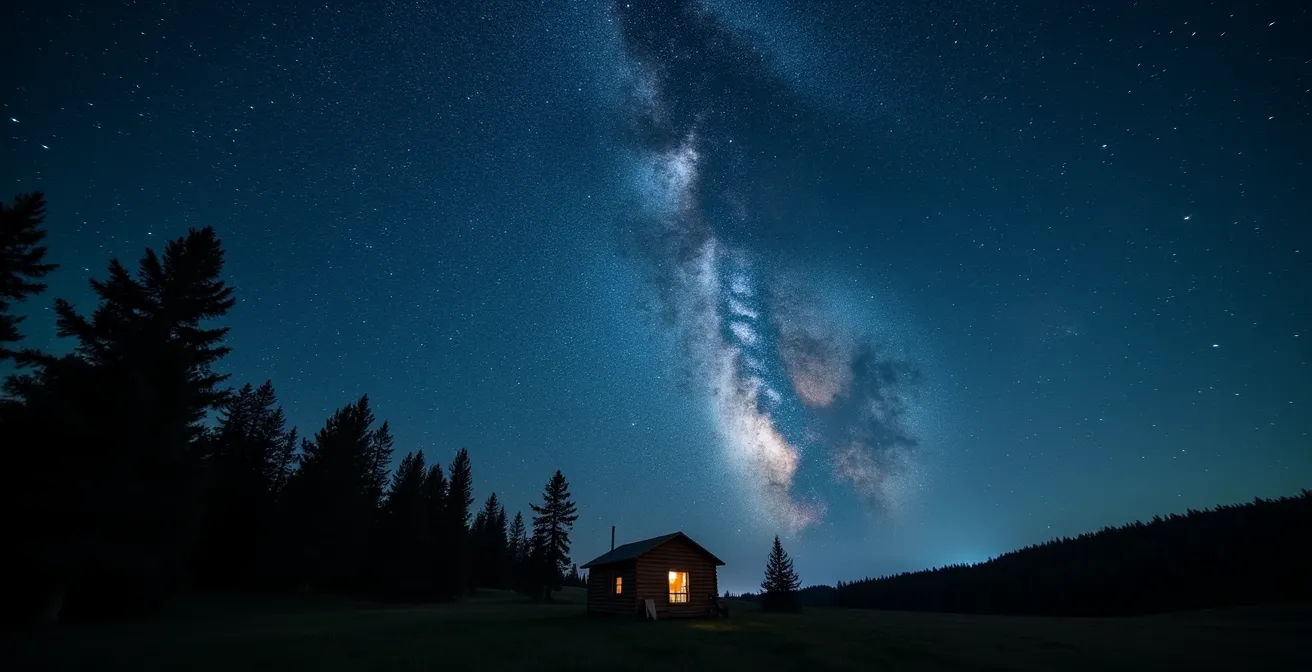
Fortunately, you don’t need to be an astronomer to find these locations. Online tools like lightpollutionmap.info and Dark Site Finder use satellite data to provide a global map of light pollution levels. You can use these maps to vet potential retreat locations, cross-referencing them with rental listings. Beyond darkness, consider other environmental factors like air quality and noise pollution from highways or flight paths, as these are also physiological stressors. Selecting the right environment is as important as any dietary or behavioral protocol you follow during your retreat.
Frequently Asked Questions About Finding a Dark Sky Retreat
What is the Bortle Scale and why does it matter?
The Bortle Scale rates sky darkness from Class 1 (darkest) to Class 9 (brightest). For a biological melatonin reset, you must aim for Class 1-3 locations where the Milky Way is clearly visible to the naked eye, indicating minimal to no artificial light interference.
Which online tools can identify dark sky areas?
Use lightpollutionmap.info or Dark Site Finder to check satellite data before booking. These tools show light pollution levels worldwide using color-coded maps, allowing you to pinpoint truly dark regions suitable for a deep sleep retreat.
What other environmental factors should I check?
Beyond darkness, verify the Air Quality Index (AQI) of the location, aiming for a score under 50 to minimize respiratory inflammation. Also, check the proximity to major highways or flight paths to avoid noise pollution, another known cortisol trigger. Finally, look for access to natural ground for “earthing” practices, which can further support nervous system regulation.