
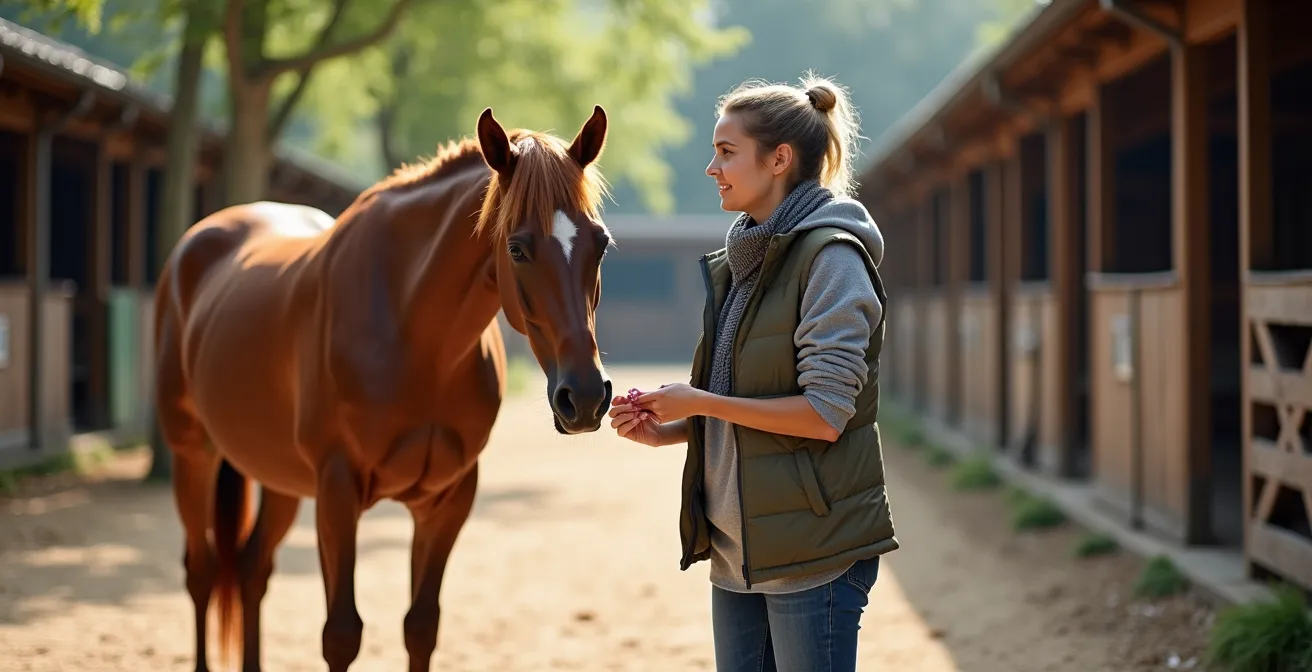
A calm-looking horse is not always a well-cared-for horse; many tourists mistake signs of mental shutdown for tranquility.
- A horse’s physical state, from its resting posture to the fit of its saddle, reveals the quality of its daily care.
- An operation’s ethics are reflected in how it treats its staff and the local environment, not just its animals.
Recommendation: Act less like a customer and more like a welfare auditor by asking targeted questions and trusting observable evidence over marketing claims.
The image of riding a horse along a sun-drenched beach or through a majestic mountain pass is a powerful travel fantasy. For any animal lover, however, this dream is shadowed by a significant fear: the risk of supporting an operation that neglects or abuses its animals. You want the experience, but you refuse to be complicit in cruelty. The common advice—to check if a horse looks skinny or has sores—is a starting point, but it’s dangerously superficial. It misses the subtle, pervasive signs of chronic discomfort and mental distress that define poor welfare.
Many well-intentioned riders look for the most obvious red flags, but unethical operators are adept at presenting a passable facade for a few hours. True assessment goes deeper. It’s about understanding the “Operational DNA” of the stable. This involves scrutinizing not just the animal, but the equipment, the staff’s condition, and the business’s impact on its environment. An operation that cuts corners on staff pay or trail maintenance is guaranteed to be cutting corners on equine care.
This guide abandons the simplistic checklist. Instead, it equips you with the observational mindset of an equine welfare inspector. The crucial shift is from passively looking for overt abuse to actively reading the complete picture. The central thesis is this: a horse’s well-being is not a standalone issue but the final, visible output of an entire system. By learning to audit that system—from the horse’s stance to the groom’s morale—you can make a truly informed and ethical choice, ensuring your travel dollars support genuine care and not just a pretty picture.
This article provides a systematic framework for your assessment. We will dissect the physical and behavioral signals of the horse, analyze the equipment, and provide tools to gauge the welfare of the human and environmental ecosystem that the animal depends on. Follow this guide to transform yourself from a hopeful tourist into a confident advocate for horse welfare.
Summary: How to Assess Horse Welfare Before Booking a Riding Tour?
- Why a horse’s resting stance tells you if it is in pain?
- English or Western: Which saddle is more secure for a first-time trail rider?
- How to honestly calculate if you are too heavy for a specific breed of horse?
- The noise mistake that spooks horses and causes accidents on the trail
- How much to tip the stable hand who actually cares for the horse?
- What are the 3 questions to ask staff to verify fair labor practices?
- How to ensure your trekking fees actually reach the local porters and families?
- How to Practice True Eco-Trekking Beyond Just “Taking Your Trash”?
Why a horse’s resting stance tells you if it is in pain?
Your first observation should happen before any interaction: watch the horses at rest. Many tourists mistake a still, unresponsive horse for a calm and docile one. This is often a critical misinterpretation. A truly relaxed horse is aware of its surroundings; its ears might gently swivel, its tail may swish at a fly, and its eyes will be soft but present. It may rest one hind leg, but its posture remains balanced and ready.
In contrast, a horse suffering from chronic pain or stress may adopt a “shutdown stance.” This is a state of learned helplessness where the animal mentally withdraws from its environment. These horses stand unnaturally still, often with a rigid posture, a glazed-over or vacant expression, and a head held at an awkward angle. They show little to no reaction to sounds or touch. A recent study highlights a disturbing reality: this apathy, a clear sign of compromised welfare, is frequently misinterpreted by humans as voluntary acceptance of human contact.
Do not confuse this unnerving stillness with good training. It is a behavioral red flag indicating the horse has given up trying to communicate its distress. Look for a horse that is present and engaged with its environment, even if it appears lazy. A healthy horse is curious. An animal that has checked out mentally is a silent victim. Your job as a welfare auditor is to learn to hear that silence for the alarm bell it truly is.
English or Western: Which saddle is more secure for a first-time trail rider?
While first-time riders often focus on which saddle style feels more secure—the deep seat of a Western saddle or the close contact of an English one—the far more critical question for horse welfare is not the style, but the fit. A poorly fitting saddle, regardless of type, is a modern-day instrument of torture. It creates pressure points that lead to pain, sores, and long-term back damage. The quality of an operator’s tack is a direct reflection of their attention to individual animal needs.
Before you even think about mounting, inspect the horse’s back where the saddle rests. Are there patches of white hair? These are not natural markings; they are permanent scars caused by pressure from a bad saddle killing the pigment-producing cells. Are there any bald spots, lumps, or sores? When the staff puts the saddle on, does the horse flinch, pin its ears, or try to bite? These are all clear indicators of pain or the anticipation of it.
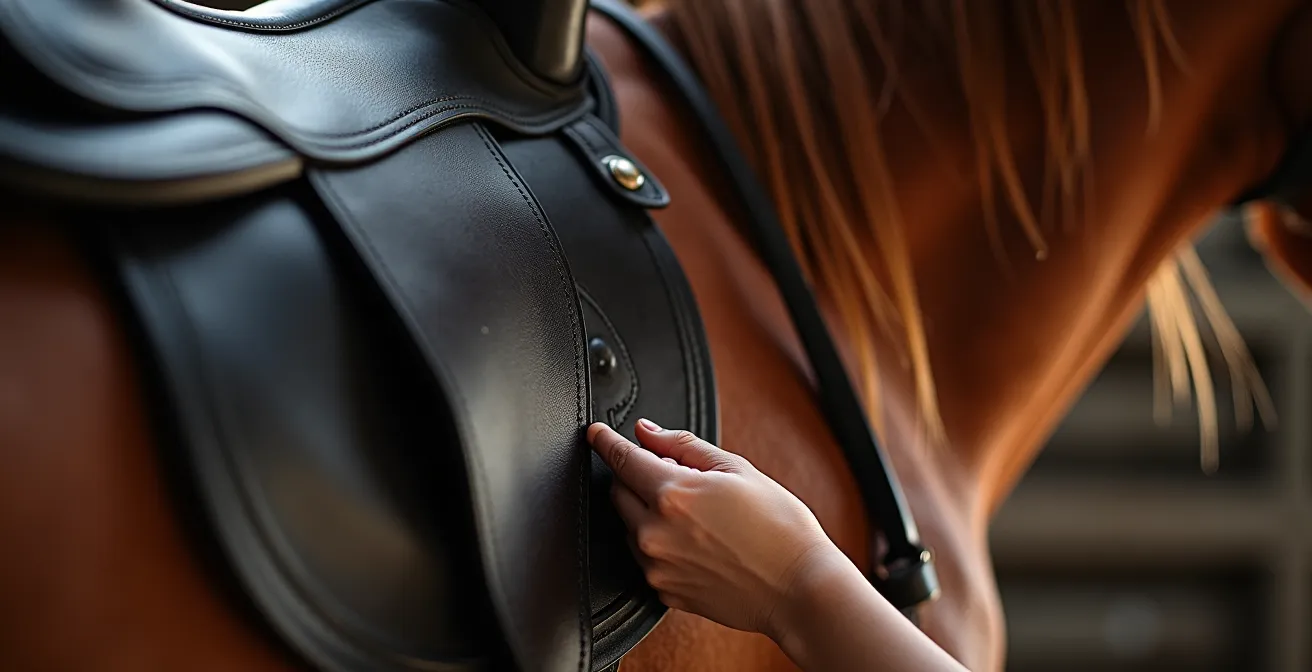
A responsible operator will have a variety of saddles in different sizes and will match them to specific horses. A one-size-fits-all approach is a massive red flag, prioritizing client turnover above animal comfort. As shown in the image, a well-fitted saddle allows for clearance over the spine and distributes weight evenly, avoiding concentrated pressure. Ask the guide if the saddles are custom-fitted or assigned to each horse. Their answer reveals the operation’s true priorities.
Action Plan: Saddle Fit and Tack Assessment
- Inspect the Back: Before saddling, look for white hairs, bald patches, or sores on the horse’s back and withers.
- Observe Saddling: Watch for the horse’s reaction—flinching, ear pinning, or moving away are signs of pain.
- Examine the Tack Room: A collection of varied saddle sizes and types indicates attention to individual horse needs.
- Question the Policy: Ask if saddles are specifically matched to each horse. A “one-size-fits-all” answer is unacceptable.
- Check Underneath: Look at the saddle pads. Are they clean, dry, and in good repair? Filthy, compressed pads are a sign of neglect.
How to honestly calculate if you are too heavy for a specific breed of horse?
This is one of the most sensitive but non-negotiable aspects of ethical riding. Being too heavy for your mount causes significant strain on the horse’s back, joints, and organs, leading to immediate pain and long-term injury. The general rule of thumb, backed by scientific studies, is that a horse can comfortably carry between 15-20% of its own body weight. Some studies suggest horses begin to show signs of stress when this figure exceeds about 20-29% of their weight. This percentage must include the rider’s weight plus the weight of the saddle and gear (tack), which can easily add another 20-40 lbs (9-18 kg).
Reputable operators will be strict about this. They will ask for your weight and honestly tell you if they do not have a suitable mount. An operator who avoids the question or says “any horse will be fine” is prioritizing your money over their animal’s health. The National Park Service, for instance, has a strict protocol for its Grand Canyon mules, which are not allowed to pack more than 20% of their body weight. This is the professional standard.
Your responsibility is to be honest about your weight and to understand the capacity of different breeds. A stout Quarter Horse has a different carrying capacity than a lighter Icelandic or Criollo. Use the table below as a general guide, but always defer to the operator’s stated limits if they are being responsible. If you are near the upper limit, consider a shorter ride or a non-riding activity.
The following table, based on common breeds used in tourism, provides a guide to help you make an informed decision. These are estimates; a horse’s fitness, age, and conformation also play a role.
| Breed | Average Weight | 20% Capacity (Rider + Tack) | Typical Use |
|---|---|---|---|
| Quarter Horse | 1100-1200 lbs | 220-240 lbs | Trail rides, ranch work |
| Icelandic | 730-840 lbs | 146-168 lbs | Trekking, gaited rides |
| Haflinger | 800-1000 lbs | 160-200 lbs | Mountain trails |
| Criollo | 880-990 lbs | 176-198 lbs | Long distance rides |
The noise mistake that spooks horses and causes accidents on the trail
Understanding horse psychology is paramount for safety and welfare. Horses are prey animals with highly sensitive hearing and a powerful flight instinct. What seems like background noise to us can be a trigger for panic. Sudden, sharp, or high-pitched noises are particularly startling. This includes a rider shouting to a friend, a crinkling plastic water bottle, a flapping raincoat, or the metallic clang of a camera against the saddle horn. These unexpected sounds can cause a horse to spook, shy, or bolt, endangering both horse and rider.
Research confirms that hyperreactive behaviors are common; one study found that nearly 59% of horses performed one or more hyperreactive behaviors while being ridden within a seven-day period. While this is a baseline, a well-managed trail horse should be desensitized to common trail noises. However, it is the rider’s responsibility to minimize new and unnecessary sounds. A good trail guide will brief you on this beforehand, reminding you to speak in calm tones and secure loose items.
The operational environment also plays a role. Is the stable located next to a busy road or construction site? Are staff members shouting or using loud machinery near resting horses? This constant auditory stress contributes to an anxious herd. Observe the overall soundscape of the stable. A calm, quiet environment suggests an operator who understands and respects the sensory world of their animals. Your acoustic footprint on the trail matters. Move with quiet intention, speak softly, and be mindful of your gear.
How much to tip the stable hand who actually cares for the horse?
In the tourism industry, tips are often given to the most visible person—the trail guide. While guides certainly earn their gratuity, the welfare of your horse is often in the hands of a much less visible individual: the groom or stable hand. These are the people who feed, water, clean, and provide the daily hands-on care for the animals. Recognizing and rewarding their work is one of the most direct ways to positively impact horse welfare.
A good operator values and retains skilled grooms. You can identify these operations by the condition of the horses and the demeanor of the staff. When you arrive, take a moment to look beyond the “front of house.” Identify the person working with the horses before the ride—brushing them, tacking them up. This is likely the groom. Handing a tip directly to this person, perhaps mentioning your horse by name (“Thank you for taking such good care of Spirit”), validates their individual effort and reinforces the value of their work to the management.
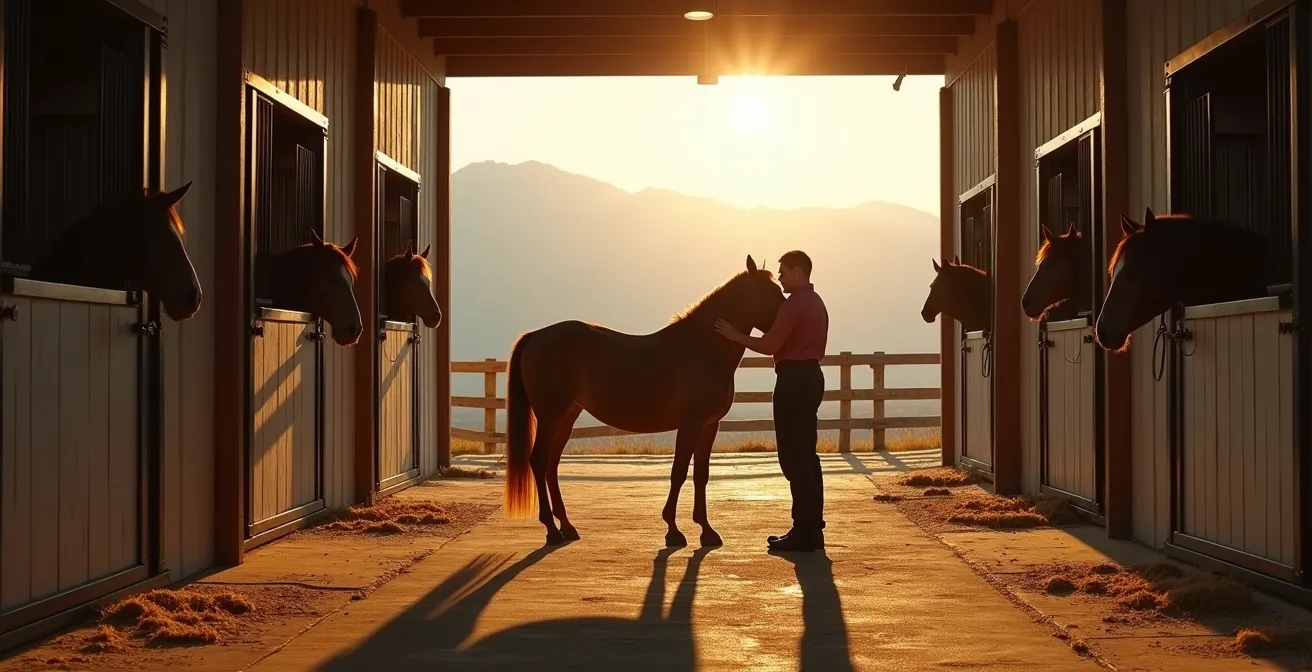
A suggested tip is $5-$10 per ride, given directly to the groom, separate from any tip for the trail guide. This small gesture does more than just supplement an often-low income; it sends a clear message that you, the client, notice and value high standards of animal husbandry. It encourages the very behavior you want to support. If a groom is happy to talk about the horses, sharing details about their personalities, it’s a strong sign of genuine care and a stable, positive work environment.
What are the 3 questions to ask staff to verify fair labor practices?
The welfare of the staff is inextricably linked to the welfare of the animals. An overworked, underpaid, and burnt-out employee cannot provide the patient, attentive care that horses require. Assessing the “Operational DNA” of a stable must include looking at its labor practices. While you cannot ask for payroll records, you can ask a few insightful questions that reveal the health of the work environment.
Ethical operators, like the veterinary-founded Unicorn Trails, are built on the principle that happy staff lead to happy horses. Wendy Hofstee, a veterinary surgeon, started the company after witnessing the devastating effects of neglect, understanding that poor treatment of animals often stems from poor management of people. This connection is fundamental. As one welfare professional who uses their services noted, even the “fussiest welfare fault-finders” can recognize an operation that prioritizes its team.
I work professionally in equine welfare, and am one of the fussiest welfare fault-finders you will ever find.
– Equine Welfare Professional, Unicorn Trails
Politely and conversationally engage a guide or groom with these three questions:
- “How many days off do you get during the busy season?” Hesitation, a vague answer, or an outright “none” points to a culture of burnout. A well-rested staff is essential for both safety and quality animal care.
- “How long have you worked with these specific horses?” High staff turnover is a major red flag. Long-term employees indicate a stable workplace and, more importantly, consistent relationships and care for the horses.
- “Which horse is your favorite and why?” This question uncovers emotional investment. An employee who can share detailed, affectionate stories about a specific horse is not just doing a job; they have a genuine bond with the animals. A generic or dismissive answer is telling.
How to ensure your trekking fees actually reach the local porters and families?
Your ethical footprint extends beyond the stable to the local community. True sustainable tourism ensures that the economic benefits of your visit are distributed fairly and contribute to the local economy. Many large, foreign-owned tour operators extract profits from a region while contributing very little to the families who live and work there. Ensuring your money supports the local community is a key part of practicing responsible tourism.
Start by researching the ownership of the company. Is it a locally owned business or a subsidiary of a large international corporation? Operators who are part of the community are more likely to reinvest in it. Look for clear statements on their website about community support or certifications like B Corporation, which legally requires companies to consider the impact of their decisions on workers, customers, community, and environment.
You can also take direct action. If the tour includes a meal, for example, ask if you can pay the providing family directly. When buying souvenirs, purchase them from local artisans rather than a centralized gift shop. Some of the most responsible operators are structured as community cooperatives or have transparent policies on how much of their revenue goes back to local staff and suppliers. Don’t be afraid to ask: “What percentage of my fee goes directly to the local guides and their families?” A transparent operator will have a ready answer.
Checklist: Your Financial Footprint Audit
- Verify Ownership: Prioritize operators explicitly owned by local community members or certified cooperatives.
- Pay Directly: Whenever possible, book a basic tour and pay for extras like meals or crafts directly to the local providers.
- Seek Certification: Look for B Corp certification or other recognized fair-trade/sustainable tourism credentials.
- Ask for Transparency: Inquire about the percentage of fees that directly benefits local staff and community projects.
- Support Local Supply Chains: Choose operators who source their feed, food, and supplies from nearby farms and businesses.
Key Takeaways
- A still, quiet horse is not necessarily a calm horse; it may be in a “shutdown” state from chronic stress.
- Saddle fit is a non-negotiable welfare issue. White hairs or sores on a horse’s back are clear signs of long-term pain.
- Ethical operations are transparent about rider weight limits and fair staff labor practices; a healthy team leads to healthy animals.
How to Practice True Eco-Trekking Beyond Just “Taking Your Trash”?
The final layer of your welfare audit is the environment. A truly ethical operator understands that their horses are part of a larger ecosystem and manages their impact accordingly. The mantra “leave no trace” is the absolute minimum. A superior operation actively contributes to the health of the environment it profits from. This means going far beyond simply packing out trash.
One key indicator is trail management. Do they use the same trails over and over, leading to soil erosion and habitat destruction, or do they have a system of trail rotation to allow areas to recover? Another is resource management. Inquire about where they source their hay and feed; supporting local farms reduces the carbon footprint of transportation. In water-scarce regions, ask about their water conservation practices for both the horses and the facility. A truly eco-conscious operation sees itself as a steward of the land.
The most advanced operators integrate their animals into the ecosystem in a positive way. For example, some management systems in Europe, studied under the AWIN welfare assessment protocol, use group-housed horses to graze semi-natural areas, helping to manage the landscape in a sustainable way. Furthermore, look for an educational component. Does the guide talk about the local flora and fauna, teaching you about the ecosystem you are riding through? Do they contribute a portion of their fees to local conservation projects? This holistic approach is the hallmark of true eco-trekking.
By applying this multi-layered inspection—from the horse’s subtle body language to the operator’s environmental policies—you shift from being a simple consumer to a powerful force for good. You vote with your wallet for a world where tourism and animal welfare are not mutually exclusive. Wield this knowledge responsibly, and every ride you take can be a step toward a more ethical industry.