
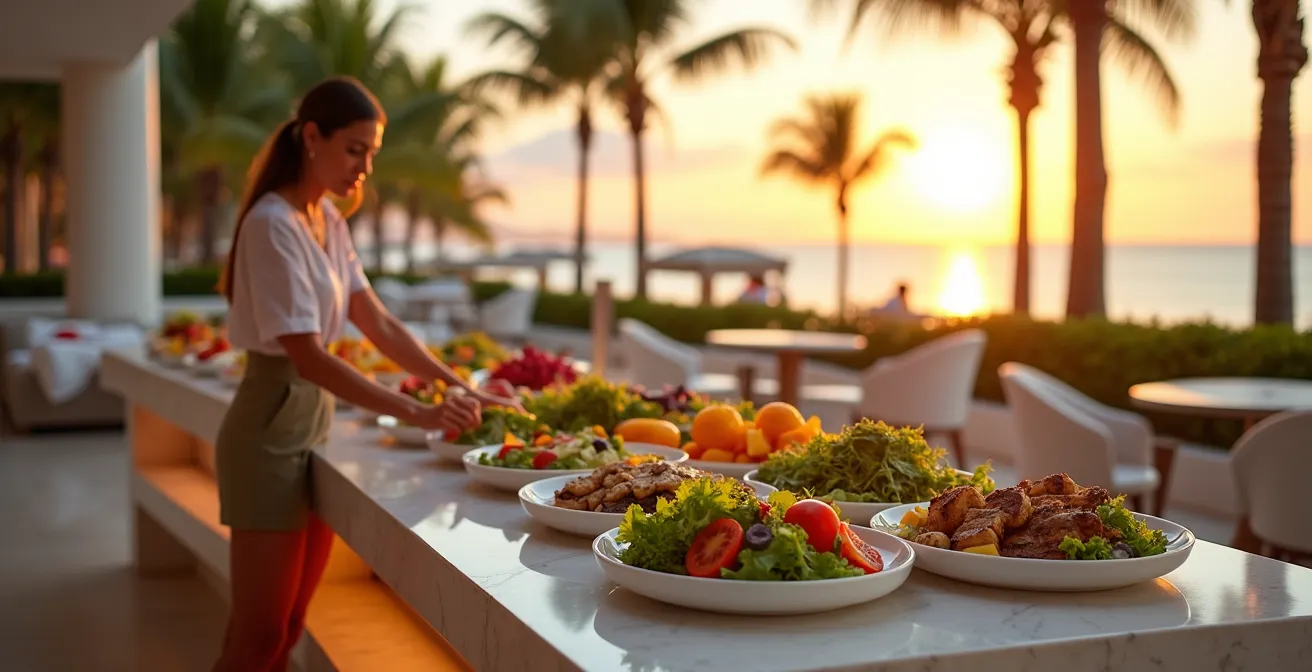
The key to surviving an all-inclusive buffet isn’t willpower; it’s a strategic game plan that turns temptation into opportunity.
- Mastering “Plate Architecture” by dedicating half your plate to greens first structurally limits high-calorie choices.
- Identifying “Culinary Decoys” like sugary dressings and premixed cocktails is crucial to avoiding hidden calories.
Recommendation: Before taking a single item, do a full reconnaissance lap of the buffet to map out your vegetable, lean protein, and complex carb targets.
The all-inclusive buffet. For someone with health goals, these two words can trigger a mix of excitement and anxiety. The sheer abundance is a sensory overload, a seemingly endless landscape of culinary temptations designed to derail even the most disciplined person. The common advice—”use a smaller plate,” “just have a little bit”—often feels simplistic and fails in the face of a seven-day vacation where social pressure and decision fatigue are at their peak. You’re there to relax and enjoy yourself, not to fight a constant battle with your plate.
But what if the problem isn’t your willpower? What if the issue is the strategy? The buffet environment is a system, and like any system, it can be understood and navigated. Instead of viewing it as a field of landmines, we can reframe it as a tactical game. The secret lies not in restriction and avoidance, but in becoming a nutritional strategist. It’s about understanding the psychology of the buffet, learning to identify the hidden traps, and arming yourself with proactive plans for every meal, from the salad bar to the dessert table.
This guide will equip you with that strategic mindset. We will move beyond generic tips and delve into the behavioral science of buffet navigation. You will learn the art of “Plate Architecture,” how to spot “Culinary Decoys,” when and how to politely request modifications from the chef, and how to master the social dynamics of group dining. By the end, you won’t just survive the buffet; you’ll conquer it, leaving your vacation feeling refreshed, nourished, and completely in control.
To help you master this environment, this article breaks down the essential strategies into clear, manageable steps. Explore the full plan to build your unshakeable buffet game plan.
Summary: A Strategic Approach to All-Inclusive Dining
- Why filling half your plate with greens first reduces calorie intake by 30%?
- How to spot the “healthy” salad dressing that has more sugar than a donut?
- Custom Order or Menu: When is it polite to ask the chef for a modification?
- The cocktail error that adds 1000 calories to your day without you noticing
- How to say “no” to dessert when the whole table is indulging?
- The inflammation trigger: 3 foods that sabotage your post-workout relaxation
- What to check on the menu before booking if you have strict macro targets?
- Why Your Macros Must Change When Training at Altitude?
Why filling half your plate with greens first reduces calorie intake by 30%?
The single most powerful tool you have at the buffet is not a smaller plate, but a strategic one. This is the science of Plate Architecture. The principle is simple: by physically occupying a large portion of your plate with low-calorie, high-volume foods first, you structurally limit the space available for higher-calorie items. It’s a behavioral nudge that works with your psychology, not against it.
Starting with greens—like spinach, lettuce, cucumbers, and bell peppers—does two critical things. First, their high fiber and water content begin to fill you up, sending satiety signals to your brain before you even touch the pasta or roasted potatoes. According to research on the Plate Method, dedicating half the plate to non-starchy vegetables is a cornerstone of managing calorie density and improving overall meal quality. This preemptive move makes you less likely to over-serve yourself on calorie-dense foods later on.
Second, it forces a conscious decision-making process. Once half your plate is a vibrant mosaic of vegetables, the remaining space becomes more valuable. You’re more inclined to choose your protein and carbohydrate sources thoughtfully, opting for a grilled fish fillet and a scoop of quinoa rather than piling on fried options that now have no room. This isn’t about deprivation; it’s about intentional construction. You are engineering your meal for maximum nutrition and satisfaction from the very first step.
By mastering this first move, you set the tone for the entire meal, making every subsequent choice easier and healthier.
How to spot the “healthy” salad dressing that has more sugar than a donut?
You’ve successfully built your Plate Architecture, dedicating half your plate to a beautiful salad. Now comes the most common pitfall: the dressing. Many buffet dressings are Culinary Decoys—they appear healthy but are often loaded with hidden sugars, unhealthy fats, and sodium. A “light” vinaigrette or a creamy “yogurt” dressing can easily contain more sugar than you think, sabotaging your efforts in an instant.
The most dangerous culprits are the thick, glossy, and uniformly creamy dressings. Think Thousand Island, French, Honey Mustard, or syrupy balsamic glazes. These are almost always packed with sugar to improve taste and texture. A mere two-tablespoon serving of honey mustard can contain 6-7 grams of sugar. To protect your healthy salad base, you must learn to read the visual cues. True olive oil and vinegar will be separated, requiring you to mix them. Anything that pours like a thick, homogenous sauce is a red flag.
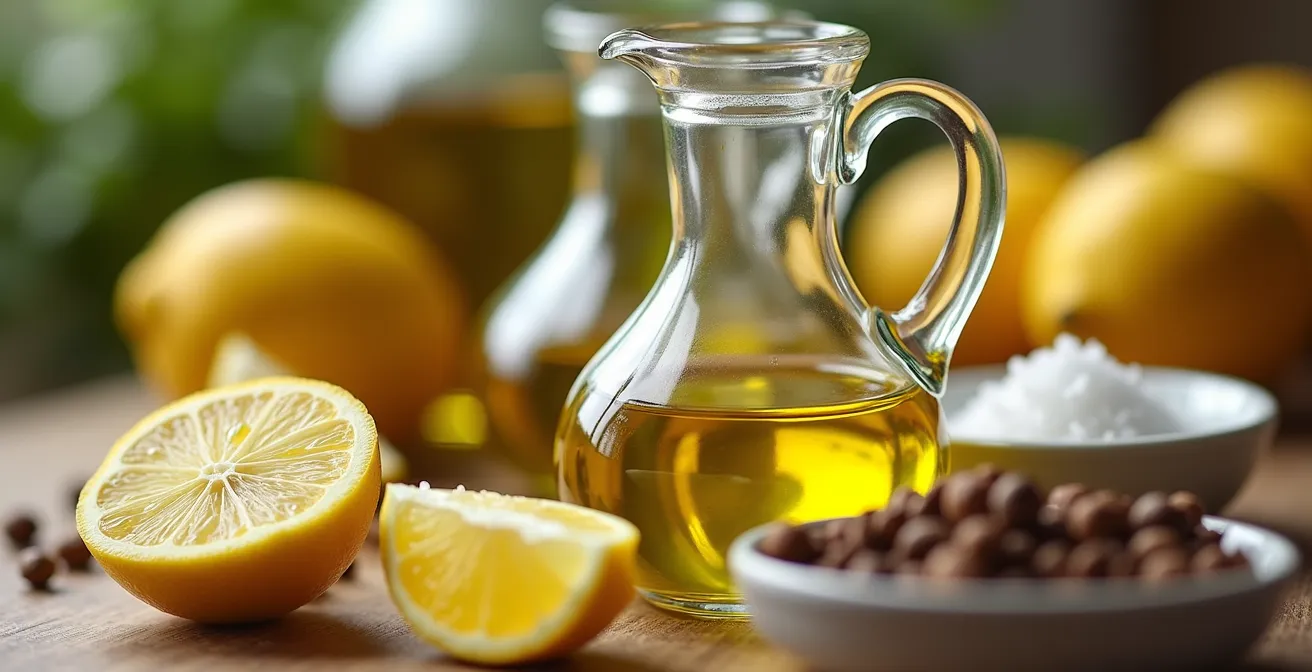
The safest and most strategic move is to create your own. As a case study by nutrition experts at Hungry Girl found, this simple hack eliminates the risk entirely. Look for the core components: a cruet of extra virgin olive oil, a bottle of red wine vinegar or balsamic vinegar (not glaze), and fresh lemon or lime wedges, often found near the seafood or beverage stations. A simple drizzle of oil, a splash of vinegar, and a squeeze of citrus with a pinch of salt and pepper creates a delicious, fresh dressing with zero hidden sugars and a dose of healthy fats.
This comparative table clearly shows the hidden dangers. As an analysis from Food Network nutritionists highlights, being aware of these differences is critical.
| Dressing Type | Sugar per 2 Tbsp | Visual Cues | Risk Level |
|---|---|---|---|
| Thousand Island | 4-5g | Thick, glossy, orange-pink | 🔴 High |
| Honey Mustard | 6-7g | Creamy, golden, uniform | 🔴 High |
| Balsamic Glaze | 5-6g | Dark, syrupy consistency | 🟡 Medium |
| Olive Oil & Vinegar | 0g | Separated layers, clear | 🟢 Safe |
By taking control of your dressing, you ensure your salad remains the nutritional powerhouse it’s meant to be.
Custom Order or Menu: When is it polite to ask the chef for a modification?
One of the most underutilized resources at an all-inclusive resort is direct access to the chefs, especially at Action Stations. These are the live cooking areas—like an omelet bar, a pasta station, or a grilling station—and they are your greatest allies for customization. Many people feel shy or impolite asking for changes, but at these stations, customization is expected and welcomed.
Remember, you’re in a place where people are paid to cater to your needs – especially when it comes to the food. Don’t be shy about asking questions, especially where your health is concerned.
– ShermansTravel Resort Expert, 8 Ways to Eat and Stay Healthy at an All-Inclusive Resort
The key is to be strategic and polite. Don’t try to deconstruct a pre-made lasagna from a chafing dish. Instead, approach the chef at the grill and ask for a piece of chicken or fish “plain, with just salt and pepper, no sauce.” At the omelet bar, requesting “egg whites only with spinach and mushrooms” is a standard and easy-to-accommodate order. The goal is to simplify, not complicate. Frame your request as making their job easier (e.g., leaving a component off) rather than asking for a unique creation.
Timing and location are everything. It’s best to make these requests during non-peak hours when the chefs aren’t overwhelmed by a long line. A friendly smile and a simple “please” and “thank you” go a long way. By leveraging these action stations, you gain complete control over your ingredients, avoiding hidden oils, sugars, and sauces while getting a fresh, perfectly cooked meal that aligns with your dietary goals. It’s the ultimate buffet hack for anyone serious about their nutrition.
This direct approach empowers you to bypass the mystery of pre-made dishes and build a meal that is both delicious and perfectly aligned with your plan.
The cocktail error that adds 1000 calories to your day without you noticing
While you’re carefully managing your plate, it’s easy to overlook the Liquid Calorie Traps being served at the bar. Sugary, pre-mixed cocktails are one of the fastest ways to consume hundreds, if not thousands, of empty calories without even realizing it. The “all-inclusive” nature makes it tempting to enjoy colorful, frozen drinks all day, but this is a significant nutritional pitfall. As nutrition experts warn, even a single margarita or piña colada can pack over 400-600 calories, primarily from sugar-laden mixes.
The worst offenders are the drinks that come from a slushie machine—daiquiris, margaritas, and piña coladas. These are almost always made with a high-fructose syrup base. Two or three of these by the pool can easily equal the calories of an entire meal, while spiking your blood sugar and promoting fat storage. This is a classic case where the “free” drink comes at a high metabolic cost.

The strategic alternative is to order “clean” or build your own. The best option is a clear spirit like vodka or gin mixed with soda water (not tonic, which contains sugar) and a generous squeeze of fresh lime. This drink has minimal calories and no sugar. If you prefer something else, a glass of dry wine with dinner is a better-controlled option. For a refreshing, non-alcoholic choice, ask for sparkling water with muddled mint and lime. The most important rule of all: for every alcoholic beverage you have, drink a full glass of water to stay hydrated and naturally moderate your intake.
By being mindful of what’s in your glass, you can enjoy a drink without undoing all the hard work you’ve put into your meals.
How to say “no” to dessert when the whole table is indulging?
The meal is over, everyone is satisfied, and then comes the social ritual: the group trip to the dessert bar. This is often the hardest moment to navigate. It’s less about the temptation of the cake and more about the social pressure to participate. Saying a flat “no, thank you” can feel isolating or even judgmental. The key here is not blunt refusal, but a strategic pivot using prepared Social Scripts.
Instead of declining, you change the subject or offer an alternative that keeps you in the social loop. A study on buffet behavior by Food Network nutritionists found that this approach is highly effective. For example, instead of focusing on what you’re not having, focus on what you *are* having. A confident, “I’m so full, everything was delicious! I’m going to get an espresso to cleanse my palate, anyone want to join me?” reframes you as a leader, not a holdout. The offer of a shared experience (like a coffee or peppermint tea) maintains the social bond.
Another powerful script is the “sharing compromise.” When a friend comes back with a stunning-looking dessert, you can say, “That looks incredible! I’m too full for my own, but could I have just one bite of yours to try it?” This allows you to participate in the tasting, satisfy your curiosity, and show appreciation for their choice, all while limiting your intake to a negligible amount. These scripts are your tools to navigate the situation diplomatically, allowing you to stick to your goals without sacrificing the social joy of the meal.
The Social Dessert Navigation Strategy
Food Network nutritionists studied buffet behavior and found that offering alternatives like ‘I’m going to have an espresso to cleanse my palate’ or suggesting sharing (‘I’ll just have one bite of yours to try it!’) successfully navigates social pressure while limiting intake to just 2 bites or less. This strategy allows participation in the social ritual without consuming a full 400-500 calorie dessert.
By preparing these social scripts, you can handle the dessert moment with grace and confidence, staying true to your health commitments.
The inflammation trigger: 3 foods that sabotage your post-workout relaxation
If you’re maintaining a workout routine on vacation, your post-exercise meal is critical for recovery. However, the buffet is rife with inflammatory foods that can counteract all your hard work, leaving you feeling sluggish and sore instead of relaxed and repaired. The abundance of processed options makes it incredibly easy to make a poor choice, and as research shows, the average person on a week-long vacation with buffets can gain a significant amount of weight, much of it driven by poor-quality, inflammatory food choices.
There are three main categories of inflammatory triggers to be vigilant about at the buffet. The first is anything deep-fried. That uniform, golden-brown color is a sign of foods cooked in cheap, reused vegetable oils (like soy or corn oil) that are high in inflammatory omega-6 fatty acids. The second is processed meats, especially at the breakfast bar. Bacon, sausages, and low-quality cold cuts are often high in sodium, preservatives, and saturated fats that promote inflammation.
The third and most deceptive trigger is hidden sugar, often found in thick, glossy sauces covering meats and vegetables. Sugar is a primary driver of inflammation in the body. A visual rule of thumb is to choose foods that look as close as possible to their natural state. Instead of reaching for the saucy, fried, and processed items, actively load your plate with anti-inflammatory powerhouses. Target grilled fish for its omega-3s, dark leafy greens and colorful berries from the salad and fruit bar for their antioxidants, and avocados or olive oil for healthy monounsaturated fats. This conscious swap will accelerate your recovery and boost your energy for the rest of the day.
By actively choosing anti-inflammatory foods, you ensure your post-workout meal supports your body’s recovery and enhances your feeling of well-being.
What to check on the menu before booking if you have strict macro targets?
For anyone with very specific health goals, such as athletes, bodybuilders, or individuals with medical dietary needs, the strategic work begins long before you arrive at the resort. Sticking to strict macronutrient targets is nearly impossible if the resort’s offerings are fundamentally incompatible with your needs. Therefore, a pre-booking reconnaissance mission is non-negotiable.
Before committing to a resort, investigate their dining options online. Don’t just look at glossy photos; search for actual guest photos of the buffet or, even better, look for online menus for the à la carte restaurants included in the package. What you’re looking for are signs of a “component-based” buffet. Can you identify a clear grilling station where plain proteins are available? Is there a large, fresh salad bar with individual ingredients rather than pre-mixed salads? Are there simple steamed vegetables and whole-grain options like quinoa or brown rice?
If the online information is vague, do not hesitate to contact the resort directly. Send an email to the concierge or food and beverage manager. Explain your dietary requirements briefly and politely (e.g., “I follow a diet that requires access to plain grilled chicken/fish and steamed vegetables.”). Their response will tell you everything you need to know about their ability and willingness to accommodate you. As a registered dietitian and author, Lauren Harris-Pincus confirms, this proactive step is standard practice. She notes in an article on how to eat healthy at a buffet that you can and should arrange for special dietary provisions with the establishment prior to your trip. A resort that is well-equipped to handle such requests will respond promptly and confidently.
This simple due diligence can be the difference between a stressful vacation spent searching for suitable food and a relaxing, enjoyable trip where your nutritional needs are effortlessly met.
Key Takeaways
- Adopt a strategist mindset: Don’t avoid food, navigate the buffet with a plan.
- Master Plate Architecture: Fill half your plate with non-starchy vegetables first to structurally limit calorie-dense options.
- Identify and bypass “Culinary Decoys” like sugary dressings and pre-mixed cocktails by opting for simple, whole ingredients.
Why Your Macros Must Change When Training at Altitude?
For the dedicated athlete, a vacation might involve training at a high-altitude resort. This environment introduces a unique physiological stress that requires a significant, strategic shift in macronutrient intake. Simply following your sea-level diet plan at altitude can lead to muscle loss, dehydration, and poor performance. The body’s metabolic demands change, and your buffet strategy must adapt accordingly.
At altitude, the body’s preferred energy source shifts more heavily towards carbohydrates because metabolizing them requires less oxygen than metabolizing fats. This means you must increase your intake of healthy carbs to fuel your workouts and prevent your body from breaking down muscle tissue for energy. Your Plate Architecture should shift from a 1/4 carb portion to a 1/3 or even larger portion, focusing on sources like oatmeal, sweet potatoes, rice, and bananas from the buffet.
Simultaneously, protein needs increase to combat the catabolic (muscle-breakdown) effects of the hypoxic environment. You should aim for 1.5-2.0 grams of protein per kilogram of body weight. The buffet’s carving stations (turkey, roast beef) and omelet bars become your best friends for hitting these higher targets. Finally, altitude is a natural diuretic, increasing the risk of dehydration. Aggressive hydration is key. Beyond just water, you can create your own electrolyte drink at the buffet by mixing water with lemon/lime wedges, a pinch of salt from the table, and potassium-rich fruits like cantaloupe or banana.
Your Action Plan: Altitude Adaptation Buffet Protocol
- Increase healthy carbs: Target oatmeal, bananas, and sweet potatoes at breakfast and before training.
- Maximize protein: Make the carving station and egg bar your first stops to load up on turkey, roast beef, and eggs.
- Time nutrients: Ensure you consume a mix of protein and carbohydrates immediately post-workout to support recovery.
- Create a DIY electrolyte drink: Mix water with fresh lemon/lime, a pinch of salt, and a slice of cantaloupe to combat dehydration.
- Hydrate aggressively: Make it a goal to double your normal water intake throughout the day, constantly sipping.
By implementing this advanced nutritional strategy, you can turn the challenge of high-altitude training into a true performance advantage, using the buffet as your personalized fuel station.