
The landscape of physical activity has evolved beyond traditional gym routines and standardized training protocols. Whether you’re drawn to the technical precision of alpine skiing, the endurance challenge of long-distance hiking, or the mechanical intimacy of maintaining your own bicycle, modern sports and activities demand a diverse skill set that combines physical capability, technical knowledge, and psychological resilience. The common thread uniting these pursuits is the requirement to adapt to unpredictable environments, master specialized equipment, and make informed decisions under varying conditions.
This comprehensive resource explores the foundational concepts behind outdoor and adventure-based activities, examining how natural environments influence performance, what technical skills separate beginners from advanced practitioners, and why understanding the biomechanics and physics underlying your chosen sport can prevent injury while accelerating progress. From the cortisol-reducing effects of exercising in nature to the specific lacing technique that prevents heel slip on steep descents, these interconnected topics form the knowledge base every active individual should build upon.
The transition from climate-controlled indoor facilities to outdoor terrain represents more than a change of scenery. Research in environmental psychology has demonstrated that exercising in natural settings produces measurable physiological differences compared to identical workouts performed indoors. The concept of biophilic exercise—physical activity conducted in environments with natural elements—shows distinct advantages for mental health markers, including reduced anxiety and improved mood stabilization.
The physiological mechanism centers on cortisol regulation. Fresh air exposure combined with visual complexity (varied terrain, changing light patterns, organic shapes) activates parasympathetic nervous system responses that counterbalance the stress hormones released during intense exercise. A runner covering five miles on a treadmill experiences different hormonal cascades than one navigating a forest trail, even when heart rate and pace remain identical.
Practical application requires understanding the transition process. Moving from gym machines to natural terrain involves recalibrating your body’s stabilizer muscles, which remain largely dormant on fixed equipment. The progression typically follows this pattern:
Calorie expenditure comparisons reveal another advantage. Trail running burns approximately 10-15% more energy than treadmill running at equivalent perceived exertion levels, due to constant micro-adjustments for terrain variation, wind resistance, and the absence of motorized belt assistance. However, two common errors undermine these benefits: inappropriate clothing layering for variable weather, and failing to plan workouts around daylight availability and weather patterns. The solution involves checking conditions before departure and understanding the base-mid-outer layer system that allows adjustment without stopping.
Winter mountain sports demand simultaneous development of physical conditioning, technical skill, and equipment knowledge. Unlike many activities where strength compensates for poor technique, snow and ice environments punish inefficiency regardless of fitness level.
The gap between intermediate and advanced skiing ability centers on the carving versus skidding distinction. Intermediate skiers typically rotate their skis across the fall line, creating a skidding arc that scrubs speed through friction. Advanced skiers engage their edges to carve a cleaner line, using ski geometry and edge angle to control speed. This technical shift requires specific drills: railroad track exercises on gentle slopes, focusing on maintaining two parallel tracks in the snow rather than one smeared line.
Fear creates the primary obstacle to progression on steep slopes. Psychological tension manifests as backward lean (weight too far over heels) and rigid joints, which paradoxically reduces control and increases fall risk. The biomechanical solution involves maintaining ankle flex and forward pressure on the tongue of the boot, even when the visual cliff effect triggers instinctive retreat. Pre-season conditioning should emphasize eccentric quad strength—the ability to control lengthening muscle contractions—through exercises like single-leg decline squats.
Equipment decisions significantly impact learning curves. The common dilemma—renting demo skis versus buying standard gear—has a clear answer for progressing skiers: demo programs allow testing of advanced ski designs (narrower waist, stiffer flex patterns, race-inspired geometry) before committing to purchase. However, the single most impactful equipment factor is boot fit. A boot fitting error that leaves excessive heel lift destroys edge control and creates compensatory movement patterns that become ingrained habits.
Ice climbing combines extreme psychological pressure with technical equipment management. The reliability of ice screw placements—the anchors that arrest falls—depends on ice quality assessment and placement angle. Solid water ice accepts screws reliably; cauliflower ice (aerated, brittle formations) requires deeper placements or alternative protection strategies.
Efficient movement conserves energy during long vertical pitches. The technique for swinging axes involves pendulum momentum rather than muscular force—allowing the tool’s weight to drive penetration through a relaxed wrist snap. New climbers typically over-grip and over-swing, exhausting forearms within minutes. Crampon selection affects foot placement options: mono-point crampons excel on vertical ice where precision matters, while dual-point designs provide stability on lower-angle terrain and mixed rock-ice surfaces.
Environmental hazards include falling ice from above—dislodged by warming temperatures, other climbers, or natural sloughing. Route selection should avoid obvious runnel lines where debris concentrates. Anchor building in hollow ice (detached from the rock behind it) requires recognizing the telltale drum-like sound when tapped and placing protection deeper or relocating entirely.
Backcountry powder environments present severe consequences for navigation and safety errors. The trap of following existing tracks leads riders into terrain selected by unknown users with potentially different skill levels and risk tolerances. Independent line selection based on slope angle measurement, aspect (direction the slope faces), and recent weather patterns is essential.
Avalanche safety equipment—beacon, probe, and shovel—requires practiced competency, not theoretical knowledge. Beacon search patterns, probe line spacing, and efficient shoveling strategies determine survival outcomes in burial scenarios. Regular practice sessions maintain muscle memory. Access methods split between splitboards (skis that attach for climbing, then separate into a snowboard) and snowshoes. Splitboards offer superior descent performance but require additional cost and setup time; snowshoes provide simplicity at the expense of carrying a regular board on your back.
The critical skill involves reading snowpack for instability. Recent loading (new snowfall exceeding one inch per hour), rapid temperature changes, and wind-loaded slopes create avalanche conditions. Conservative decision-making means retreating when warning signs appear: recent avalanche activity, collapsing or cracking snow beneath you, or hollow-sounding snowpack.
The evolution from road cycling to gravel riding represents both a mechanical adaptation and a strategic shift. Road bikes optimize for smooth pavement efficiency; gravel riding demands versatility across mixed surfaces including hardpack dirt, loose gravel, sand, and occasional pavement connectors.
Tire pressure on mixed surfaces follows counter-intuitive physics. Lower pressure (30-45 PSI depending on rider weight and tire width) increases comfort and traction by allowing the tire to deform around obstacles rather than bouncing over them. This suspension effect reduces energy loss and improves control on loose surfaces. However, pressure too low causes pinch flats and rim damage.
Many riders successfully modify road bikes for light gravel duty. The essential changes include wider tire clearance (minimum 32mm, ideally 38-42mm), lower gearing (compact or sub-compact chainrings), and potentially flared drop bars for better leverage on rough descents. The clipless pedals versus flats debate hinges on riding style: clipless systems maximize pedaling efficiency on long distances; flat pedals enable quick foot placement when balance becomes compromised on technical sections.
Nutritional strategy requires adjustment. Gravel rides proceed at slower average speeds than road rides due to terrain variation, creating an under-fueling error. Riders accustomed to consuming 60-90 grams of carbohydrate per hour at road pace may neglect nutrition when speeds drop, but energy expenditure remains high due to increased upper body engagement and constant balance corrections. Route planning should avoid heavy traffic sections—gravel riding’s appeal centers on solitude and reduced vehicle interaction.
International bicycle touring introduces logistical complexity beyond domestic rides. Transportation decisions begin with hard cases versus soft bags. Hard cases provide maximum protection during flights but add weight and cost; soft bags minimize expense and storage burden but require careful packing with frame padding.
Understanding local traffic laws prevents legal complications and safety hazards. Right-of-way rules, required equipment (bells, lights, reflective gear), and cycling-specific regulations vary significantly between countries. The rental versus bringing your own bike calculation depends on trip duration and destination. Bringing your fitted bike makes sense for tours exceeding one week where comfort and familiarity matter; renting locally simplifies logistics for shorter explorations.
Mechanical preparedness includes carrying a spare derailleur hanger—the small aluminum component that breaks deliberately to protect your frame during impact. This commonly forgotten item can end a tour if unavailable locally. Planning fuel stops in remote areas requires mapping grocery stores, markets, and water sources with 50-mile maximum intervals as safety margin.
Trail running demands fundamental changes to running mechanics and pacing strategy compared to road running. The constant terrain variation—roots, rocks, elevation changes, loose soil—requires continuous adjustment that engages muscle groups largely ignored on flat, consistent surfaces.
The biomechanics of uphill efficiency involve shortening stride length while increasing cadence, maintaining forward lean from the ankles (not the waist), and using arm drive for momentum. Many runners make the mistake of staring at their feet, which creates neck tension and prevents seeing terrain three to five steps ahead—the optimal visual range for planning foot placement.
Strengthening stabilizers for uneven ground should emphasize single-leg exercises: Bulgarian split squats, single-leg Romanian deadlifts, and lateral step-downs build the hip and ankle stability that prevents rolled ankles and knee tracking issues. These movements prepare the body for the constant micro-corrections trail running demands.
Hydration systems present a practical choice between vests and belts. Running vests distribute weight across shoulders and provide storage for layers and nutrition but can cause chafing on long efforts. Hip belts concentrate weight at the body’s center of gravity and minimize upper body contact but offer limited carrying capacity. Pacing strategy based on elevation gain requires abandoning pace-per-mile metrics in favor of effort-based pacing: maintain consistent perceived exertion regardless of speed, accepting that steep climbs might reduce pace to 15-20 minutes per mile.
Understanding your equipment’s mechanics transforms you from passive user to active problem-solver. Bicycle mechanics exemplifies this principle—the difference between being stranded by a mechanical issue and completing a field repair often determines whether an adventure continues or ends prematurely.
The methodology of tactile memory emphasizes hands-on learning rather than video instruction. Physically disassembling and reassembling components—derailleurs, brake calipers, headsets—creates neuromuscular patterns that persist under stress when memory fails. Essential tool kits for mobile repairs should include: multi-tool with chain breaker, spare tube, tire levers, mini-pump or CO2 cartridges, quick-link for chain repair, and spoke wrench.
The critical distinction between factory standard and field repair involves permanent versus temporary solutions. Field repairs prioritize getting home safely; proper fixes happen in controlled workshop environments. One dangerous error involves overtightening carbon components. Carbon fiber requires specific torque values (typically 4-6 Newton-meters for seat posts and stem bolts)—exceeding these specifications causes structural damage invisible until catastrophic failure occurs. Torque wrenches eliminate guesswork.
Scheduling preventive maintenance based on mileage or time intervals prevents failures during critical moments. Chains require replacement every 2,000-3,000 miles; cables stretch and fray; brake pads wear. Systematic inspection routines catch developing issues before they cascade into complex problems.
Activities with significant consequences—BASE jumping, wingsuit flying, high-altitude mountaineering—demand mastery of adrenaline cycles and high-consequence decision-making. The biochemistry of flow states reveals why these sports attract participants despite obvious dangers: the neurochemical cascade produced during peak performance (norepinephrine, dopamine, endorphins, anandamide, serotonin) creates experiences unavailable through safer activities.
Risk assessment matrices for soloists formalize decision-making processes. Rather than relying on gut feeling, systematic evaluation considers: current conditions, personal skill level, bailout options, consequence severity, and recent rest quality. The mistake of complacency after success kills experienced practitioners—each ascent or jump presents independent variables that previous successes don’t control.
The distinction between BASE jumping and wingsuit flying illustrates progressive risk escalation. BASE jumping involves parachute deployment from fixed objects (buildings, antennas, spans, earth); wingsuit flying adds horizontal flight before deployment, increasing complexity and potential failure modes. Both demand extensive skydiving experience as foundation.
Integrating extreme experiences into daily life prevents the psychological whiplash of returning to routine existence after intense adventures. Journaling, photography, and gradual re-engagement with normal responsibilities ease the transition and preserve mental health.
Long-distance hiking and horseback riding represent traditional activity forms experiencing renewed popularity. Both emphasize sustainable pacing and cultural immersion over speed-focused objectives.
Endurance walking as cultural immersion tool allows observation and interaction impossible from vehicles. The pace enables conversation with locals, photography without time pressure, and genuine environmental connection. However, technical details determine comfort over multi-day efforts.
The lacing technique for heel lock prevents blisters and toenail damage on descents. The method involves creating extra friction at the ankle: lace normally until reaching the top eyelets, then create a loop on each side and cross the laces through opposite loops before tying. This locks the heel into the boot’s cup, preventing forward slide on downhills.
Wool versus synthetic socks for moisture management depends on conditions. Merino wool excels in cold weather, retains warmth when wet, and resists odor development. Synthetic blends dry faster and cost less but develop smell quickly. Managing pack weight distribution involves placing heavy items (water, food, tent) close to your back and centered between shoulder blades, with lighter gear at pack bottom and top.
The error of skipping trekking pole training costs efficiency and joint protection. Poles reduce knee loading by 20-30% on descents when used properly, but improper technique creates shoulder fatigue and provides minimal benefit. Water purification in the wild requires choosing between filtration systems (physical barrier removes pathogens), chemical treatment (iodine or chlorine dioxide), and UV sterilization (battery-powered devices).
Ethical interaction with animals in tourism settings begins with recognizing signs of overwork in horses: lethargy, visible ribs, dull coat, reluctance to move, and wounds from poorly fitted tack. Responsible operators limit daily ride hours, rotate animals, and maintain proper body condition.
English versus Western tack for beginners involves different riding styles. English saddles promote close contact and precise communication; Western saddles distribute weight across larger surface area and provide security features (horn, high cantle) for nervous riders. The impact of rider weight matters significantly—most horses comfortably carry 20% of their body weight, meaning a 1,000-pound horse should not carry riders exceeding 200 pounds including tack.
Behavioral etiquette includes avoiding loud, sudden movements or noises that trigger flight instincts. Tipping guides and grooms varies by location but generally follows 15-20% of ride cost for guides, with additional gratuity for grooms who prepare and care for horses.
High-intensity group training provides rapid conditioning through structured competition and social accountability. The format combines cardiovascular stress with resistance movements, but requires careful modification to prevent injury.
Modifying plyometrics for joint safety involves reducing impact forces while maintaining intensity. Box jumps can become box step-ups with explosive hip drive; burpees can eliminate the jump component. The role of protein in muscle repair requires 1.6-2.2 grams per kilogram of body weight daily when training intensely—significantly higher than sedentary recommendations of 0.8 grams per kilogram.
AMRAP (as many rounds as possible) versus form-focused training represents competing philosophies. AMRAP workouts prioritize volume and intensity, potentially sacrificing movement quality. Form-focused approaches reduce repetitions to maintain technical standards. The optimal approach alternates: some sessions emphasize volume to build work capacity; others prioritize perfect movement patterns to prevent compensatory habits.
The error of ignoring rhabdomyolysis signs creates medical emergencies. This condition—muscle tissue breakdown releasing myoglobin into bloodstream—manifests as severe muscle pain beyond normal soreness, weakness, dark urine, and confusion. It requires immediate medical attention and results from excessive volume increases or inadequate recovery. Managing group competition pressure involves remembering that others’ fitness levels don’t dictate your appropriate loading—scale movements to your current capacity regardless of surrounding performance.
International cycling adventures represent some of the most rewarding experiences for dedicated road cyclists, whether you’re tackling the legendary cols of the French Alps, navigating the scenic coastal routes of Spain, or participating in prestigious European sportives. However, the prospect…
Read moreThe surge in gravel cycling’s popularity has left many road cyclists wondering whether they need to invest in a dedicated gravel bike or if their trusty road machine can handle mixed-terrain adventures. The encouraging news is that with thoughtful modifications…
Read moreProfessional kitesurfing pushes athletes into conditions that would make recreational riders pack up and head home. When world-class competitors launch in 40-knot winds or navigate treacherous wave breaks at iconic venues, they’re not simply relying on courage and skill. Behind…
Read moreReef breaks represent some of the most captivating and challenging wave formations on the planet. From the thunderous barrels of Pipeline to the terrifying ledge at Teahupo’o, these coral and rock platforms create waves that have defined surfing’s progression for…
Read moreDownhill skiing demands a sophisticated blend of technical precision, athletic conditioning, and tactical awareness. Whether you’re transitioning from intermediate parallel turns to advanced carving or seeking to refine your technique across varied terrain, understanding the biomechanical principles that underpin expert…
Read more
Pushing hard in a bootcamp after 40 isn’t about toughing it out; it’s about using objective data to build a physiological shield against injury. Your body requires more protein (30-40g per meal) to repair muscle compared to your younger self….
Read more
A calm-looking horse is not always a well-cared-for horse; many tourists mistake signs of mental shutdown for tranquility. A horse’s physical state, from its resting posture to the fit of its saddle, reveals the quality of its daily care. An…
Read more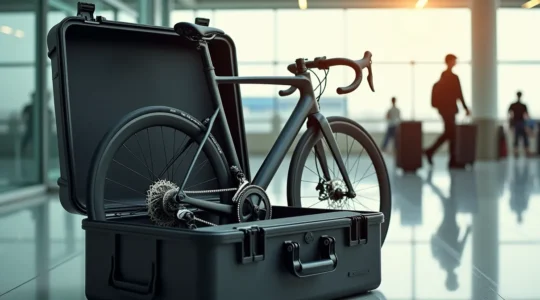
The greatest threat to your high-end carbon bike isn’t a careless baggage handler; it’s an incomplete risk management plan that overlooks the crucial on-the-ground realities of your destination. Flight protection is only the first step; mechanical contingencies and security at…
Read more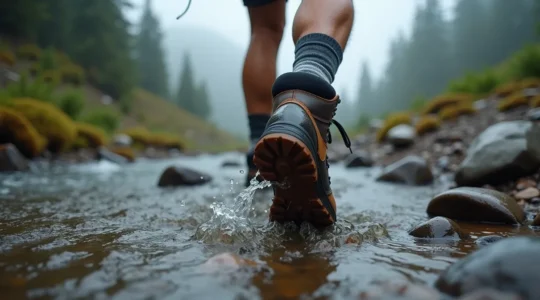
In summary: Blister prevention in wet conditions is not about staying dry, but managing skin maceration and friction. Biomechanics are key: proper pack loading, lacing techniques, and pole use directly reduce foot pressure. A systematic hourly foot care routine is…
Read more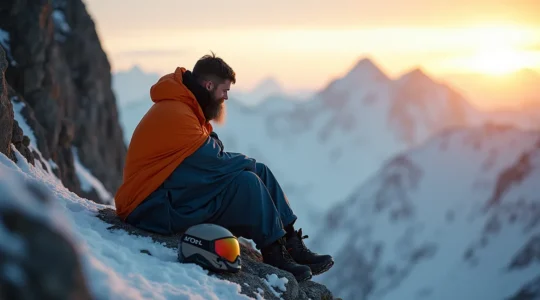
Contrary to popular belief, the post-extreme sports ‘adrenaline dump’ isn’t a crash to be passively endured; it’s a predictable neurochemical transition that can be actively managed as a core discipline. Your brain’s perception of time and risk is chemically altered…
Read more