
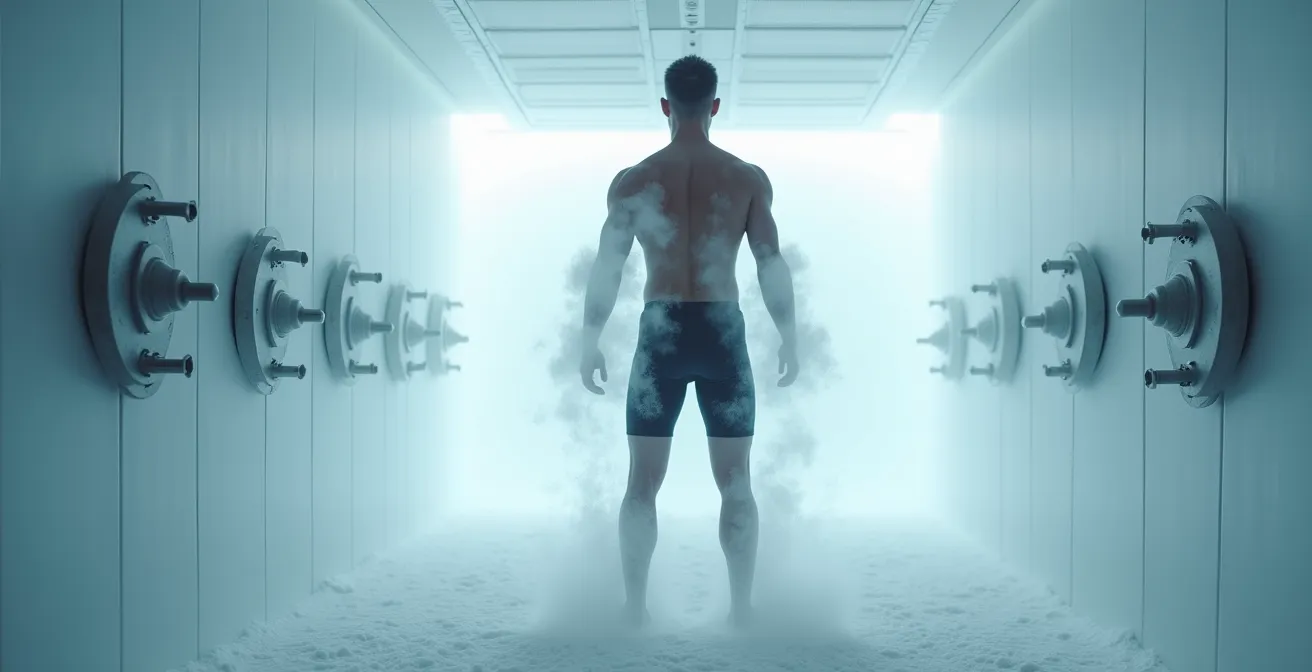
Cryotherapy’s anti-inflammatory power is not in the cold itself, but in the precise protocol used to trigger specific hormonal and cellular responses.
- Timing is critical to avoid blunting the muscle growth signals triggered by exercise-induced inflammation.
- Session frequency, not just duration, is the key determinant for achieving a lasting reduction in systemic inflammation and joint pain.
Recommendation: Master the protocols for exposure duration, safety gear, and post-session rewarming to transition from simple cold exposure to a calculated biohacking tool for longevity.
For the dedicated biohacker, every intervention is a calculated input designed to produce a specific output. You track your sleep, monitor your heart rate variability, and optimize your nutrition. Now, you’re turning your attention to cold exposure, specifically Whole Body Cryotherapy (WBC), as a tool for systemic inflammation control and enhanced recovery. The internet is filled with claims about its benefits, often boiling it down to a simple mantra: “cold reduces inflammation.” But this superficial understanding is insufficient for true optimization.
The common approach often overlooks the critical variables: Is localized cryo enough? How long do the euphoric effects last? And most importantly, what are the non-negotiable protocols to prevent injury and maximize the desired physiological response? The assumption that “colder is better” or “longer is better” is not just simplistic; it’s potentially counterproductive. The true key lies not in enduring the cold, but in manipulating it. The anti-inflammatory response is not a passive benefit but an actively triggered event.
This article moves beyond the platitudes. We will not just tell you *that* cryotherapy works; we will detail *how* to make it work for you. This is a protocol-driven guide that treats cryotherapy as a precision instrument. We will dissect the mechanisms, from the hormonal triggers that create post-session alertness to the cellular signaling errors that can blunt your muscle growth. By understanding the precise timing, frequency, and safety procedures, you can unlock the full potential of cryotherapy as a cornerstone of your pain relief and longevity strategy.
To navigate this complex topic, we have structured this guide to address the most critical questions a biohacker would ask, moving from foundational principles to advanced recovery strategies.
Summary: The Biohacker’s Protocol for Cryotherapy
- Whole Body or Localized: Which is better for systemic autoimmune issues?
- Why you feel euphoric and alert for 3 hours after freezing?
- How to protect your fingers and toes from frostbite in a -110°C chamber?
- The rewarming error that can cause shock to the cardiovascular system
- How often should you freeze to see a permanent reduction in joint pain?
- Cryotherapy or Sauna: Which triggers better hormonal adaptation after endurance?
- The inflammation error that blunts your muscle growth signal
- Hot vs. Cold: Which Spa Cycle Accelerates Recovery After a Marathon?
Whole Body or Localized: Which is Better for Systemic Autoimmune Issues?
When addressing systemic inflammation, such as that associated with autoimmune conditions, the approach must also be systemic. Localized cryotherapy, which targets a specific joint or muscle group, is effective for acute injuries but fails to trigger the body-wide response necessary to combat systemic issues. The goal is not just to cool a single area but to initiate a comprehensive physiological cascade.
Whole Body Cryotherapy (WBC) is the superior protocol for this purpose. Exposing the entire body to extreme cold for a short duration acts as a powerful hormonal trigger. This intense stimulus prompts a significant release of anti-inflammatory mediators and hormones into the bloodstream. As a comprehensive analysis in Nature explains, this is a multi-faceted response that localized therapy cannot replicate.
Case Study: The Systemic Impact of Whole Body Cryotherapy
Research confirms that WBC provides significant benefits through its systemic anti-inflammatory effect. A study published in Nature highlights that WBC increases plasma concentrations of cortisol, β-endorphins, and catecholamines. This hormonal surge regulates adaptive changes in cardiovascular parameters and enhances the drive of the vagus nerve at rest. This powerful, full-body reaction is the key to influencing systemic conditions, an outcome that targeted, localized cooling simply cannot achieve.
Therefore, for a biohacker aiming to manage systemic inflammation or autoimmune symptoms, the protocol is clear: prioritize WBC. The objective is to leverage the body’s own powerful neuroendocrine and anti-inflammatory systems on a global scale, which requires a global stimulus.
Why You Feel Euphoric and Alert for 3 Hours After Freezing?
The profound sense of euphoria, mental clarity, and heightened alertness experienced after a Whole Body Cryotherapy session is not merely a psychological response to enduring the cold. It is a direct and measurable neurochemical event. The primary driver of this effect is a massive surge in norepinephrine, a hormone and neurotransmitter crucial for attention, focus, and mood.
When your body is exposed to the extreme cold of a cryotherapy chamber, it perceives this as a significant, albeit brief, threat. This triggers a powerful fight-or-flight response, and the adrenal glands flood the system with norepinephrine. RestoreLabs research found that a single WBC session can nearly double the levels of this powerful chemical, an effect that can persist for up to three hours. This surge is responsible for the immediate “high,” the sharpened focus, and the significant reduction in perceived pain.

As the abstract visualization above suggests, this is a moment of intense neural activation. The sensation of cold acts as a switch, activating pathways that lead to this beneficial neurochemical release. Dr. Rachele Pojednic, a leader in cryotherapy research, contextualizes this powerful effect:
Our study adds to the growing evidence that Whole Body Cryotherapy can be a powerful tool for managing systemic inflammation—even in healthy individuals.
– Dr. Rachele Pojednic, Restore’s Director of Scientific Research & Education
This euphoric feeling is a tangible indicator that the protocol has successfully triggered a systemic hormonal response, which is the very mechanism that also drives the anti-inflammatory benefits.
How to Protect Your Fingers and Toes From Frostbite in a -110°C Chamber?
The effectiveness of Whole Body Cryotherapy is predicated on exposing the body to extreme temperatures, often between -110 to -140°C. While the core and larger muscle groups are protected by their mass, the body’s extremities—fingers, toes, ears, and nose—are highly susceptible to cold-related injury, specifically frostbite. The primary safety protocol involves creating insulation and minimizing direct exposure to the skin in these vulnerable areas.
During a session, the body initiates profound vasoconstriction, pulling blood away from the extremities to protect the vital organs. This defense mechanism dramatically reduces heat in the hands and feet, making protective gear non-negotiable. According to medical guidelines, cryotherapy chambers are cooled to -200 to -300 degrees Fahrenheit, a temperature at which unprotected tissue can be damaged in seconds. Proper gear is not an option; it is a mandatory part of the procedure.
Your pre-session protocol must include a thorough check of your protective equipment. The goal is to create a barrier of dry, insulating air around the most sensitive skin. Follow this essential gear checklist:
- Wear thick, dry protective coverings specifically designed for cryotherapy, including thermal gloves and socks or slippers.
- Use a disposable or cloth mask to protect the mouth and nose, warming the air slightly before it enters your lungs.
- Ensure all clothing and protective gear is completely dry, as moisture will freeze instantly and can cause burns.
- Avoid wearing any metal, including underwire bras or jewelry, as metal conducts cold rapidly and can cause severe skin burns.
- Choose materials like merino wool or hydrophobic synthetics over cotton for socks and gloves, as they retain insulating properties even if they become slightly damp.
Adherence to this protective gear protocol is the single most important factor in preventing adverse events and ensuring a safe, effective session.
The Rewarming Error That Can Cause Shock to the Cardiovascular System
The cryotherapy protocol doesn’t end when you step out of the chamber. The rewarming phase is a critical, and often overlooked, part of the process where a significant risk exists: cardiovascular shock. After 2-3 minutes of extreme cold, your blood vessels are in a state of maximum vasoconstriction. A common but dangerous mistake is to seek immediate, intense heat, such as jumping into a hot shower or sauna.
This rapid shift from extreme cold to extreme heat can cause vasodilation (rapid widening of blood vessels) that is too fast for the cardiovascular system to manage. This can lead to a sudden, dramatic drop in blood pressure, causing dizziness, fainting, or in severe cases, shock. The correct protocol involves a gradual, progressive rewarming process that allows your circulatory system to readjust safely. This is a crucial element of thermal shock management.

As the thermographic visualization suggests, rewarming is a process of blood returning to the peripheries. This must be a controlled flow, not a sudden flood. The Mayo Clinic emphasizes that proper post-cryotherapy procedure is as important as the exposure itself. Proper rewarming involves gradual movement and allowing the body to return to a normal temperature naturally over several minutes, rather than forcing it with an external heat source.
The correct rewarming protocol is simple: after exiting the chamber and removing your protective gear, engage in 5 to 10 minutes of light physical activity. This can be gentle cycling on a stationary bike, walking, or dynamic stretching. This light muscle contraction generates gentle, internal body heat and encourages blood to circulate back to the extremities at a controlled pace, preventing the dangerous drop in blood pressure associated with rapid external heating.
How Often Should You Freeze to See a Permanent Reduction in Joint Pain?
While a single Whole Body Cryotherapy session can provide temporary relief from pain and inflammation, achieving a lasting, permanent reduction in chronic joint pain requires a consistent, protocol-driven approach. The key variable is not the duration of a single session, but the frequency of sessions over time. The anti-inflammatory effects of cryotherapy are cumulative; each session builds upon the last to down-regulate the body’s overall inflammatory state.
For biohackers seeking to move beyond temporary relief and create a durable change in their inflammatory baseline, sporadic sessions are insufficient. Research from RestoreLabs has provided a clear benchmark for the minimum effective dose. Their findings confirmed that a frequency of at least six sessions per month was the threshold for observing lower systemic inflammation and potential improvements in blood sugar regulation. This consistency is what allows the body to adapt and maintain a less inflammatory state.
The research underscores that while some benefits are felt immediately, the most profound and lasting changes to chronic conditions take time to manifest. A case study on the long-term effects illustrates this principle:
Long-Term Effects of Regular Cryotherapy
According to RestoreLabs research, the anti-inflammatory effects show lasting durability when a consistent protocol is followed. Their study concluded that frequent use, starting at six sessions per month, was linked to lower inflammation. While these cumulative benefits may not be fully felt for the first three weeks, the data demonstrates that regular cryotherapy is beneficial as a durable anti-inflammatory treatment for mitigating future chronic inflammation.
Therefore, the protocol for permanent joint pain reduction involves scheduling cryotherapy as a regular part of your routine—at least twice a week initially—rather than using it as an occasional intervention. This commitment to frequency is what transforms cryotherapy from a temporary analgesic into a long-term inflammation management tool.
Cryotherapy or Sauna: Which Triggers Better Hormonal Adaptation After Endurance?
For an endurance athlete, post-race recovery is a game of hormonal and cellular management. Both cryotherapy and sauna are powerful tools, but they trigger different hormonal adaptations and are therefore suited for different phases of recovery. Choosing the right modality at the right time is crucial for maximizing recovery and performance gains. The question is not which is “better,” but which is better for a specific physiological goal: reducing immediate systemic inflammation or promoting long-term tissue repair.
Cryotherapy’s primary advantage in the immediate post-endurance phase (within 48 hours) is its profound effect on norepinephrine. This powerful hormone acts as a potent vasoconstrictor and anti-inflammatory agent, helping to blunt the excessive systemic inflammation that follows a grueling event like a marathon. Its effect is rapid and focused on damage control.
A sauna, conversely, excels at stimulating Growth Hormone (GH) release. The heat stress promotes tissue repair, protein synthesis, and long-term adaptation. However, this is a process best initiated after the acute inflammation phase has subsided, typically 72 hours or more after the event. Using heat too early can sometimes exacerbate inflammation.
Dave Asprey’s analysis provides a clear protocol-driven comparison for biohackers looking to optimize their recovery stack.
| Treatment | Primary Hormone Response | Best Timing Post-Exercise | Main Benefit |
|---|---|---|---|
| Cryotherapy | 200-300% Norepinephrine surge | 48 hours after race | Reduces systemic inflammation |
| Sauna | Growth Hormone increase | 72+ hours after race | Promotes tissue repair |
WBC performed within 48 hours of an elite race (but not within an hour of the race) increased recovery, speed, and power in athletes by 20%.
– Dave Asprey, Freeze Away Inflammation with Cryotherapy
The optimal protocol, therefore, is sequential: use cryotherapy in the first 48 hours to manage inflammation, then transition to sauna sessions after 72 hours to promote deep tissue repair and hormonal adaptation for growth.
The Inflammation Error That Blunts Your Muscle Growth Signal
For anyone training for strength or hypertrophy, a certain amount of acute, localized inflammation is not only normal but essential. This post-workout inflammation is a critical cellular signal that triggers muscle protein synthesis and adaptation—it’s the very process that tells your muscles to repair and grow stronger. The most common and detrimental error in using cold therapy is applying it too soon after a workout, effectively blunting this vital growth signal.
Immediately after resistance training, your body initiates a pro-inflammatory response to clear out damaged tissue and begin the rebuilding process. Intervening with cryotherapy or an ice bath during this peak phase can short-circuit this natural, beneficial process. While it may reduce immediate soreness, it can also significantly inhibit long-term performance gains and muscle growth. The key is to let the acute inflammatory process run its course before introducing cold therapy.
The protocol requires a specific waiting period. Research on the timing of cold therapy is clear: you must avoid it in the immediate aftermath of your workout. Studies show it is detrimental if applied within 1-3 hours post-workout, which is precisely when the pro-inflammatory signaling is at its peak. Waiting until after this window allows you to get the recovery benefits of cryotherapy without compromising the anabolic signals from your training.
Protocol for Timing Cryotherapy to Enhance, Not Inhibit, Muscle Growth
The goal is to separate the acute, beneficial inflammation of exercise from the chronic, detrimental inflammation you want to reduce. The optimal protocol is to wait at least an hour, and ideally longer, after a strength workout before using Whole Body Cryotherapy. This allows the peak pro-inflammatory process to complete its signaling function. As Dave Asprey notes, WBC performed within 48 hours of an elite race—but critically, not within the first hour—was shown to increase recovery, speed, and power. This strategic delay is the key to using cold therapy to augment, rather than sabotage, your training adaptations.
For the biohacker, the takeaway is precise: use WBC to manage systemic inflammation on rest days or long after a workout, but never within the immediate post-exercise window if muscle growth is the primary goal.
Key Takeaways
- For systemic inflammation, Whole Body Cryotherapy (WBC) is mandatory; localized therapy is insufficient as it fails to trigger the necessary hormonal cascade.
- The euphoric, alert state post-session is a direct result of a massive norepinephrine surge, a key indicator that a systemic response has been achieved.
- The most critical timing error is using cryotherapy within 1-3 hours of a strength workout, as this can blunt the inflammatory signals essential for muscle growth.
Hot vs. Cold: Which Spa Cycle Accelerates Recovery After a Marathon?
After the extreme stress of a marathon, recovery is a multi-day, multi-phase process. Simply choosing “hot” or “cold” is an incomplete strategy. The most effective protocol involves a specific sequence of both, known as contrast therapy, designed to manage different physiological needs at different times. The goal is to first mitigate damage and then accelerate repair and waste removal.
In the immediate hours following the race (0-6 hours), the priority is blunting excessive muscle damage and inflammation. Here, cold therapy is the correct tool. A session of Whole Body Cryotherapy or an ice bath helps to constrict blood vessels, reducing swelling and the inflammatory cascade that can cause secondary damage to muscle tissue.
After the initial 24 hours, the focus shifts. The body now needs to deliver oxygen and nutrients to the damaged muscles to begin the repair process. This is where heat therapy becomes essential. A sauna or hot tub promotes vasodilation, increasing blood flow and facilitating the delivery of restorative compounds. From day 2 onwards, the most powerful protocol is to combine these two modalities in a contrast cycle. This involves alternating between a hot sauna and a cold cryotherapy chamber, which creates a “pumping” action in the lymphatic system, effectively flushing out metabolic waste products and accelerating recovery. Effective contrast therapy utilizes temperatures from -100 to -140°C for cold and +70 to +90°C for heat to maximize this effect.
To implement this advanced strategy correctly, follow a structured timeline.
Your Post-Marathon Recovery Protocol
- Phase 1 (0-6 Hours Post-Race): Prioritize cold therapy. Use Whole Body Cryotherapy or an ice bath to blunt acute muscle damage and inflammation.
- Phase 2 (24-72 Hours Post-Race): Switch focus to heat therapy. Use a sauna or hot tub to increase blood flow and promote nutrient delivery for tissue repair.
- Days 2-3 (Contrast Initiation): Begin your contrast therapy protocol. Start with a 10-15 minute sauna session, followed immediately by a 2-3 minute cryotherapy session.
- Contrast Cycling: Repeat the hot-to-cold cycle 2-3 times per session. This alternation creates a powerful lymphatic pumping effect to flush metabolic waste.
- Monitor & Adjust: Pay close attention to recovery markers such as morning stiffness, muscle soreness (DOMS), and overall energy levels to tailor the frequency of your sessions.
By following this phased protocol, you are actively managing each stage of recovery, from initial damage control to long-term tissue regeneration.
Now that you are equipped with the precise protocols for safety, timing, and application, the next logical step is to integrate these principles into a consistent routine to achieve your specific longevity and performance goals. Start today by implementing these strategies to transform cryotherapy from a simple cold plunge into a calculated and powerful biohacking tool.